


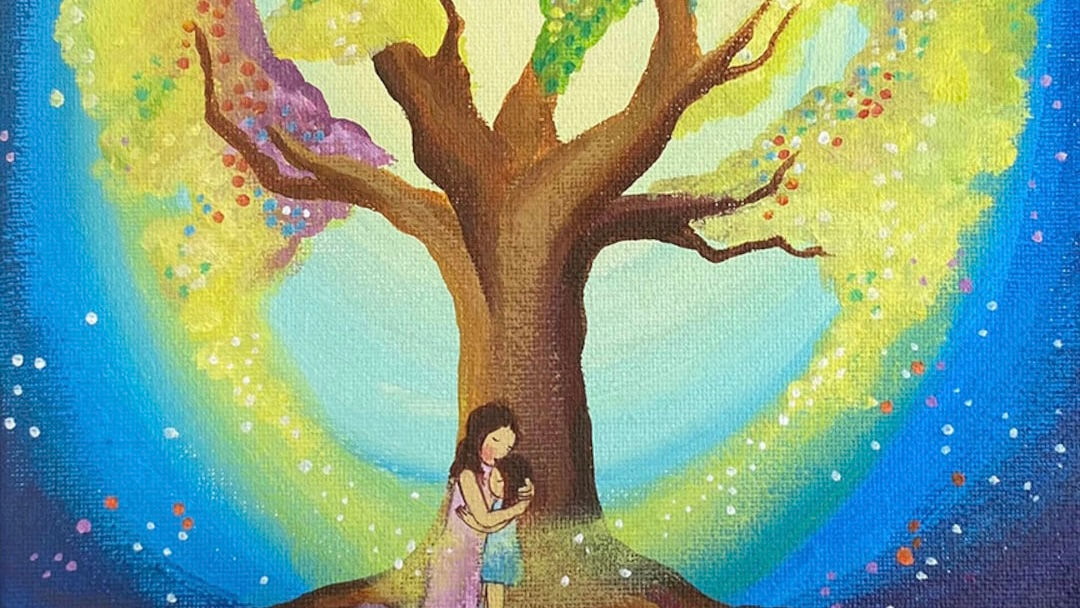
You Were Never “Too Much” — You Were Unprotected

Understanding Your Survival Response
Many people grow up in homes that look functional on the outside but feel deeply unsafe on the inside.
A mother who was emotionally overwhelmed, unpredictable, or dysregulated.
A father who was absent, distant, or quietly unavailable.
For a child, this isn’t simply “hard.”
It's devastating.
A child’s nervous system is not built to manage emotional chaos alone. When safety, nourishment, and attunement are missing, the body does the only thing it can do: it enters survival mode.
And no child should ever have to live there.
What Your Nervous System Learned
When the person meant to soothe you couldn’t regulate herself…
And the person meant to protect you wasn’t present enough to anchor the system…
Your body learned something painful, but logical:
“My emotions are too much.”
“I shouldn’t have needs.”
“I’m on my own.”
From there, dysregulation wasn’t a flaw — it was an adaptation.
You learned to scan, predict, please, perform, and buffer.
Not because you were weak — but because love and safety are survival needs for a child.
The Unpredictable Mother: Navigating Emotional Storms
If your mother was emotionally immature, this doesn’t mean she was “bad” or “evil.”
It means she was overwhelmed by her own inner world and unable to hold yours.
So you learned to become:
Easy
Pleasant
Quiet
Low-maintenance
You learned not to cry “too long,” not to need “too much,” not to feel “too deeply.”
And the unpredictability — the sudden shifts from warmth to withdrawal, closeness to coldness — taught you something profound:
“I must constantly adjust myself to stay safe.”
You became hyper-attuned.
Always reading the room.
Always adapting.
The Absent Father: The Missing Anchor
And then there was the father who wasn’t emotionally available — whether through work, silence, distance, or avoidance.
His absence carried a quiet message:
“You’re alone. I can’t help you.”
So you learned to handle things yourself.
Needs felt dangerous.
Emotions felt inconvenient.
And again — your nervous system did exactly what it was designed to do:
it protected you.
The Roles You May Have Taken On
Children are remarkably intelligent. In unsafe systems, they adapt in brilliant ways.
You may recognize yourself as:
The peacemaker
The invisible observer
The rebel
The rescuer
The overachiever
These weren’t personality traits.
They weresurvival strategies— chosen by a child doing their best in an impossible environment.
How Those Strategies Show Up in Adult Life
And now, years later, you might notice:
You took responsibility too early → now you carry too much.
You ignored your needs → now you struggle to know what you want.
You became hyper-independent → now you’re exhausted.
You learned to please to stay loved → now you put others first, always.
You criticize yourself relentlessly → even after proving your worth again and again.
Connection feels unsafe → even though you deeply long for it.
None of this means something is wrong with you.
It means your nervous system learned exactly what it needed to survive.
Your Past Shaped You — But It Does Not Define You
Healing is not about erasing the past.
It’s aboutfilling what was left empty.
It’s learning to offer yourself now what you didn’t receive then:
✨ Self-compassion instead of self-judgment
✨ Boundaries instead of emotional distance
✨ Self-worth instead of self-doubt
Healing is learning to stay with yourself — gently, patiently — without abandoning your own heart.
It’s allowing the child who never felt safe to finally exhale.
It’s whispering, again and again:
“I’m allowed to exist.”
“I’m allowed to have needs.”
“I’m allowed to take up space.”
“I don’t need to earn safety — I can create it.”
This is the shift from being a passive continuation of your past
to becoming anactive creator of your future.
The emotions don’t disappear.
But they become easier to feel, easier to regulate, less overwhelming.
Over time, survival softens into safety.
Hyper-vigilance gives way to presence.
And life begins to feel less like something you must endure — and more like something you can inhabit.
You Are Not Alone
If this resonates, know this:
There is nothing wrong with you.
Your system did exactly what it had to do.
And now — slowly, compassionately — you get to teach it something new.
✨ Safety is possible.
✨ Connection is allowed.
✨ You are no longer alone.


Comments